

If you bathe a double-coated dog at home, choosing between a handheld force dryer and a cage dryer affects how you manage drying, your available space, and how closely you can control airflow. The products listed here are high-velocity force dryers, not cage dryers, so this guide explains what their specifications can and cannot tell you when comparing them with a separate cage-dryer setup.
Use the comparison to narrow down priorities such as adjustable airflow, hose reach, heat controls, storage, and noise claims. For broader grooming supplies, see our pet grooming category.

Pros
- Adjustable 65 to 135 mph airflow
- Two heat settings
- Stretchable 7-foot hose
- Four nozzle types included
Cons
- Weighs 10.3 pounds
- Who should skip it: shoppers seeking a lightweight dryer

Pros
- Adjustable speed and temperature
- Three nozzles included
- Flexible spring hose
- Listed temperature range of 95°F to 135°F
Cons
- No measured noise level is provided
- Who should skip it: shoppers needing detailed pet-size guidance


Pros
- Adjustable heat and airflow
- Four interchangeable grooming nozzles
- 83-inch retractable hose
- Designed for thick coats
- Molded carrying handle
Cons
- Up to 158°F requires careful heat management
- Listed noise level is under 78 dB
- Skip it if your pet dislikes powered grooming tools

Pros
- Adjustable airflow and temperature
- Four included nozzles
- Designed for thick coats
- Built-in temperature protection
- Noise-reduction structure
Cons
- High airflow may not suit every sensitive pet
- Who should skip it: Owners seeking a compact personal dryer

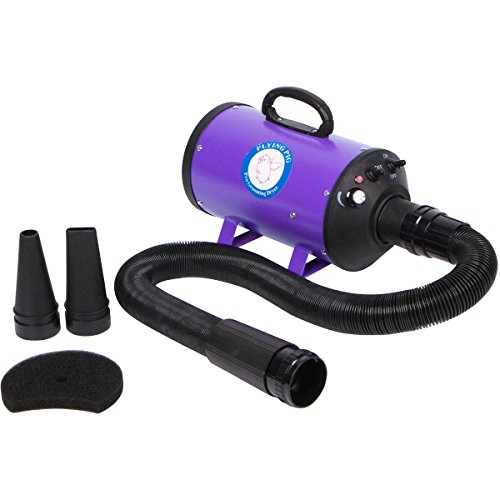


Drying method and how much control you want
A high-velocity dryer directs moving air through a hose and nozzle, so you can target particular areas and adjust where the air goes as you groom. The nine products in this comparison use this general format. A cage dryer is a different category of setup, and no cage-dryer model or specifications are included here; check the cage dryer’s own instructions and features before comparing it directly.
For a pet that needs frequent redirection or targeted drying, a handheld hose may offer a more direct grooming workflow. A cage-style setup may appeal to someone considering a different arrangement, but the supplied data does not establish its drying time, suitability, or unattended-use limits. Do not assume a cage dryer can be used without supervision.
Airflow and coat type
Strong airflow can help move water and loose undercoat, but the useful setting depends on the pet and the area being dried. Several listings describe adjustable speed: the SHELANDY specifies a 65 to 135 mph range, while the TBC PET listing specifies airflow up to 160 mph. HomeRunPet lists 99 adjustable speed levels, but gives a different airflow figure, 268 mph. These claims use different specifications and should not be treated as directly comparable measurements.
If your dog has a dense coat, prioritize adjustable airflow and nozzle choices rather than selecting the largest advertised number alone. For a small, elderly, noise-sensitive, or short-nosed pet, start with gentle airflow at a distance and follow the product instructions. The listings do not establish that every model suits every breed or coat.
Heat settings and temperature information
Heat can change comfort and drying approach, but temperature ranges vary across listings. The Pet Control HQ model specifies 86°F to 158°F, Flying Pig lists approximately 81°F to 160°F, and TBC PET lists 95°F to 140°F. SHELANDY identifies two heat settings without giving a range. HomeRunPet lists three temperature settings and temperature protection, while other listings describe adjustable temperature or an overheat response.
Confirm the exact control scheme and temperature details on the current product listing, especially if your pet is heat-sensitive. A no-heat option is specified for Flying Pig, and EGFKI’s 5.2 HP model says its heat can be switched off. Avoid directing heated air at one spot for a prolonged period, and follow the manufacturer’s instructions.
Noise, handling, and hose reach
Noise claims differ in format, so they are not a reliable head-to-head ranking. HomeRunPet lists 43 dB, Pet Control HQ says under 78 dB, and several other listings claim noise reduction without providing a comparable absolute level. If sound is a concern, check how the figure was measured and consider whether your pet can become familiar with the dryer gradually.
Hose reach matters when you need to move around a pet or place the motor farther from the grooming area. The Flying Pig listing specifies a hose up to 10 feet; SHELANDY specifies a stretchable hose up to 7 feet, and HomeRunPet lists a 6.5-foot hose. Consider where the dryer will sit, how you will hold the hose, and whether the cord and storage arrangement work in your space.
Nozzles, upkeep, and storage
Nozzle count is not the same as ease of grooming, but it can indicate the range of airflow shapes supplied. SHELANDY, EGFKI, Pet Control HQ, and TBC PET list four nozzles; DOPICT lists three, as does HomeRunPet. Flying Pig lists two and Sherbao lists three. Match the supplied attachments to your intended tasks, and verify the exact accessory set before buying.
Filter access and storage also matter in a home routine. Sherbao specifies air filters and a wall-mount kit, while the Flying Pig listing includes a filter. Other product details do not consistently describe filter cleaning or replacement. Check the maker’s care guidance, the dryer’s storage footprint, and whether you have a safe place to keep the hose and attachments. Browse the pet dryer category for related options.
How We Compared These Products
This guide compares the supplied product specifications and listing claims, including airflow controls, heat information, hose reach, nozzle count, and stated noise features. Customer feedback information was not supplied, and no firsthand evaluation is documented, so the recommendations are based on product research rather than direct use. The listings do not include cage dryers, which limits direct model-to-model comparison between the two dryer types.
Which Option Fits Your Pet and Home?
For flexible reach around a moving dog: The Flying Pig High Velocity Dog Pet Grooming Dryer is listed with a hose that stretches up to 10 feet and adjustable airflow and heat, including a no-heat setting. Its two-nozzle set is smaller than those listed for several alternatives. Who should skip it: shoppers who specifically want more included nozzle choices or a cage-dryer format.
For a wide range of speed adjustments: The HomeRunPet Dog Dryer for Grooming lists 99 adjustable speed levels, three temperature settings, a 6.5-foot hose, and three nozzles. Its listed 43 dB noise claim may be relevant to buyers comparing sound information, but verify measurement context because other listings use different methods or figures. Who should skip it: anyone who needs a cage dryer or wants a longer hose than the specified 6.5 feet.
For a lower advertised airflow ceiling and several attachments: The SHELANDY Groomer Partner Pet Hair Force Dryer Dog lists adjustable airflow from 65 to 135 mph, two heat settings, a hose stretching up to 7 feet, and four nozzle types. Its listed one-year warranty may be worth checking in the current seller details. Who should skip it: buyers who require a cage dryer or need a stated temperature range, which this listing does not provide.
If you are set on a cage dryer, compare that model’s manufacturer guidance, temperature controls, dimensions, and supervision requirements separately. The products here cannot establish which dryer type will be quieter, faster, or safer for your individual pet.
Frequently Asked Questions
Are the products in this comparison cage dryers?
No. The supplied products are high-velocity force dryers that use a hose and nozzle. A cage dryer is a distinct format, and no cage-dryer model is included in the product list.
Can a high-velocity dryer work for a thick-coated dog?
Several listings describe their products as suitable for thick or dense coats, and adjustable airflow is available on many models. The right setting depends on the dog and grooming task, so use product instructions and introduce airflow gradually rather than assuming one setting suits all coats.
Which listed model has the longest specified hose?
Flying Pig specifies a hose that stretches up to 10 feet. SHELANDY lists up to 7 feet and HomeRunPet lists 6.5 feet. Check the current listing for the exact included configuration.
Does a higher advertised speed mean faster drying?
Not necessarily. Listings use different airflow measurements, and coat condition, nozzle, technique, and dryer placement also affect the routine. Compare like-for-like specifications when available rather than relying on one number.
Are these dryers quiet enough for a noise-sensitive pet?
Noise claims vary: HomeRunPet lists 43 dB, Pet Control HQ states under 78 dB, and several other products describe noise reduction without a comparable absolute measurement. These claims do not guarantee your pet will tolerate the sound. Introduce any dryer cautiously and stop if your pet is distressed.
What should I check before choosing a cage dryer?
Check the manufacturer’s intended use, temperature controls, dimensions, airflow arrangement, and explicit supervision instructions. Those details are not provided for a cage dryer in this comparison, so do not infer them from the force-dryer listings.





Write Your Review
No reviews yet. Be the first to share your experience!