

When a dog sheds on carpet but leaves hair on stairs, furniture, and hard floors, the choice between a cordless stick vacuum and an upright-style pet vacuum affects how often you clean and how much setup each session requires. A cordless model can simplify quick pickups, while a corded stick design avoids battery planning and keeps running as long as it has power.
This guide compares the listed models by suction claims, runtime or corded operation, pet-hair features, dust capacity, maneuverability, storage, and maintenance. For more options, you can browse the Pet Vacuums category or explore related items in Cleaning.

Pros
- Self-standing design
- Anti-tangle brush with LED light
- Up to 65 minutes runtime
- Handheld and stick modes
- Touchscreen status display
Cons
- Runtime varies by cleaning mode
- Performance claims are manufacturer provided
- Who should skip it: Buyers needing independently verified performance data

Pros
- Converts from stick to handheld
- For carpets and hard floors
- Includes crevice and upholstery tools
- Listed weight is 7.6 pounds
Cons
- Corded design limits cordless convenience
- Who should skip it: shoppers seeking a cordless vacuum

Pros
- Large 1.8-liter dust cup
- Self-standing design
- Anti-tangle brush design
- Wall-mounted charging and accessory storage
Cons
- Up to 70-minute runtime applies to Min mode
- Replacement battery is sold separately
- Who should skip it: shoppers seeking a stated runtime at higher suction settings


Pros
- Converts from stick vacuum to handheld
- Pet-focused tools are included
- Lightweight at 8.58 pounds
Cons
- Corded design requires access to an outlet
- Who should skip it: shoppers needing cordless cleaning
Cordless convenience versus nonstop corded power
The first decision is whether you want to move freely or avoid charging altogether. The HFFLH Cordless Vacuum Cleaner, Cordless Vacuum Cleaner, Upgraded 650W 60KPA, Cordless Vacuum Cleaner, 650W 60KPA 70Min Powerful, and KQAHA Cordless Vacuum Cleaner list maximum runtimes from 65 to 70 minutes. Those figures are mode-dependent claims, so check how the stated runtime compares with the suction level you expect to use.
The Shark Rocket Corded Stick Vacuum and Shark Rocket Pro DLX Corded Stick Vacuum, XL Cup use corded power instead. That can suit extended carpet cleaning or homes where remembering to recharge is inconvenient, but you will need an outlet and must manage the cord around furniture. Choose cordless for quick room-to-room pickups, and choose corded when continuous operation matters more than freedom of movement.
Pet-hair brush design and floor coverage
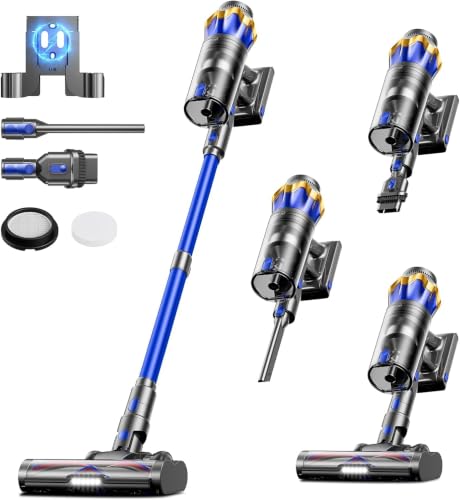
Hair management matters because wrapped hair can reduce cleaning convenience and add upkeep. The four cordless models list V-shaped or comb-assisted anti-tangle floor brushes. HFFLH also lists an LED floor brush, while KQAHA lists a green LED headlight. These features may help reveal debris or guide hair into the airflow, but they do not establish pickup performance on every carpet.
Both Shark models list pet-hair pickup, swivel steering, and low-profile reach. The Pro DLX specifically lists specialized pet tools and deep carpet cleaning, while the standard Rocket lists crevice and upholstery tools. If your pet leaves hair on couches and stairs, prioritize the included above-floor tools. If most debris is embedded in rugs, verify the floor-head design and the surfaces each model supports.
Product notes: HFFLH offers a cordless, self-standing format with anti-tangle brush claims, but its listed maximum runtime depends on operating conditions, so buyers who need sustained high suction should verify actual mode runtimes. Its 8-layer filtration claim may appeal to shoppers focused on dust retention, but the listing does not provide independent verification. Who should skip it: shoppers who prefer corded operation or want documented performance on a specific carpet type.
The standard Shark Rocket is under 9 lb according to its listing, converts to a handheld, and provides corded suction. Its advantages are no charging interval, swivel steering, and tools for upholstery and crevices. Its trade-offs are cord management and a smaller, bagless stick format compared with the Pro DLX’s listed XL cup. Who should skip it: buyers who need cordless cleaning or want a larger listed dust cup.
Dust-cup size, emptying, and routine cleaning
A larger dust cup can reduce interruptions in a high-shedding home, but capacity alone does not determine how often you will empty it. The JRFYHFT Cordless Vacuum Cleaner, 650W 60KPA 70Min Powerful lists a 1.8L cup and one-touch dust removal. The Shark Rocket Pro DLX lists a 0.68-quart XL dust cup, while the other listings describe bagless or easy-empty designs without giving a comparable capacity.
Maintenance still includes hair removal and filter care. The JELLYPIG listing advises emptying the cup after each use and cleaning the HEPA filter, tube, and roller every 1 to 2 weeks. Treat that as model-specific guidance, not a universal schedule. Before buying, confirm whether filters and brush rolls are removable, how replacement parts are obtained, and whether the emptying process suits your tolerance for dust exposure.
The JELLYPIG model lists 650W power, 60KPa maximum suction, a 70-minute low-mode runtime, a self-standing design, and a screen that displays dust-cup fullness and maintenance information. Its trade-offs include the need to use the original adapter and disconnect the charging cable before operation, as stated in the listing. Who should skip it: buyers who do not want regular filter and brush maintenance or who need a corded vacuum.
JRFYHFT combines the same listed 650W and 60KPa claims with a 1.8L cup, replaceable-battery option, wall-mounted charging, and a 3-year warranty claim. The wall mount needs suitable placement, and the advertised 70-minute runtime is specified for minimum mode. Who should skip it: renters or shoppers without a practical wall-mount location, and anyone who wants to avoid battery-dependent cleaning.
Storage, handling, and above-floor cleanup
Storage can decide whether a vacuum is used for daily pet-hair spots or left in a closet. HFFLH, JELLYPIG, JRFYHFT, and KQAHA list self-standing designs, which can make short pauses easier. JRFYHFT also lists wall-mounted charging and accessory storage, while the other cordless options emphasize handheld conversion or attachments for areas such as cars, stairs, sofas, and crevices.
The Shark Rocket converts to a handheld and lists low-profile reach under furniture. The Pro DLX also converts to a handheld and lists an easy-release foot pedal. These corded models may be useful when pet hair collects on stairs or furniture, but confirm that the included tool set matches your surfaces and that the cord length and outlet locations work in your rooms.
KQAHA lists 50KPa suction, up to 65 minutes in its lowest mode, self-standing storage, an LED display, and an 8-in-1 handheld configuration. Its practical trade-offs are battery charging and the need to follow the listing’s adapter guidance. Who should skip it: households that need uninterrupted corded operation or buyers who prefer a larger explicitly stated dust cup.
Suction claims, filtration, and what to verify
Advertised wattage and KPa figures are useful for comparing the listings, but they are not a substitute for independent results on your exact floors. HFFLH and KQAHA list 600W and 50KPa, while JELLYPIG and JRFYHFT list 650W and 60KPa. Consider these figures alongside brush design, floor compatibility, handling, and maintenance rather than treating the highest number as a guaranteed winner.
HFFLH and JRFYHFT list 8-layer filtration with 99.99% claims. Those are manufacturer statements, not independent verification in the supplied information. If dust retention is important, confirm the filter type, replacement availability, cleaning instructions, and whether the manufacturer specifies the test conditions behind the claim.
How We Compared These Products
This comparison uses the supplied product listings, including stated suction, runtime, corded operation, brush design, dust-cup details, storage features, accessories, and maintenance guidance. The listed ratings are included in the comparison widget, but no customer feedback was supplied for analysis. This is product research rather than firsthand evaluation, so verify current manufacturer details, included tools, battery conditions, and replacement-part support before buying. Our editorial approach is explained on the How We Review page.
Which Option Fits Your Pet and Home?
For frequent cordless spot cleaning: Consider the HFFLH Cordless Vacuum Cleaner if self-standing storage, an anti-tangle brush, LED lighting, and a listed 65-minute maximum runtime fit your routine. Consider the KQAHA Cordless Vacuum Cleaner if handheld flexibility and listed multi-use attachments are more important. Skip either if you do not want battery charging or regular filter care.
For larger dust loads or organized charging: The Cordless Vacuum Cleaner, 650W 60KPA 70Min Powerful lists a 1.8L cup, wall-mounted charging, a replaceable-battery option, and self-standing operation. Those features may suit a high-shedding household with a suitable wall location. Skip it if a wall mount is impractical or if the maximum runtime claim does not match your preferred suction mode.
For uninterrupted corded cleaning: The Shark Rocket Corded Stick Vacuum lists under-9-lb handling, handheld conversion, swivel steering, and pet-hair tools. The Shark Rocket Pro DLX Corded Stick Vacuum, XL Cup adds a listed 0.68-quart cup and specialized pet tools. Choose based on whether a lighter listed design or the larger stated cup and pet-tool package better fits your home. Skip both if cord-free cleaning is essential.
Frequently Asked Questions
Is a cordless stick vacuum suitable for pet hair?
It can be suitable for routine pet-hair pickup when the model lists a brush designed for hair management and enough runtime for your cleaning area. The cordless models here list anti-tangle brush features, but actual results depend on floor type, debris, and suction mode.
Which listed vacuums work on carpets and hard floors?
All six listings describe use across carpet and hard-floor surfaces, with the Shark models specifically describing carpet and hard-floor cleaning. Check the manual and floor-head guidance for delicate surfaces before use.
Do the cordless runtime figures apply at maximum suction?
Not necessarily. JELLYPIG and KQAHA specify their maximum runtime in low or lowest suction mode, and JRFYHFT specifies minimum mode. Ask the seller or manufacturer for runtime at the suction setting you plan to use.
Which model lists the largest dust cup?
JRFYHFT lists a 1.8L dust cup. Shark Rocket Pro DLX lists a 0.68-quart cup. The other supplied listings do not provide a directly comparable capacity, so verify those details before purchase.
Are these vacuums bagless?
The standard Shark Rocket explicitly lists a bagless easy-empty cup, and the other listings describe dust cups or dust containers. Confirm the exact emptying and filter design in the product manual for the model you select.
Can these vacuums clean furniture and stairs?
The Shark models list handheld conversion and tools for above-floor cleaning. KQAHA lists handheld use for car seats, pet beds, stairs, and sofas, while HFFLH lists handheld mode and attachments for sofas and car interiors. Confirm the included tools before ordering.
What should I check before buying a pet vacuum?
Match the power source to your routine, then verify brush design, dust-cup capacity, filter cleaning, replacement parts, storage requirements, included tools, and floor compatibility. Also confirm whether runtime claims are tied to low suction and whether a wall mount or original charger is required.





Write Your Review
No reviews yet. Be the first to share your experience!